What to Wear to a Fall Work Event When You Come Straight From the Office

Quick Answer: The office-to-event transition fails because people try to solve it with one outfit that works for both, which produces something slightly too formal for the desk and slightly too plain for the room. The reliable approach is a base that is unambiguously office-appropriate plus three specific swaps: shoes, one upper layer, and jewelry. That combination changes the read of the outfit far more than most people expect, takes under five minutes, and fits in a tote. The other half of the problem is that your outfit has been worn for eight hours before the event starts - which is a fabric choice made this morning, not a fix available at 6pm.
The invitation says 6:30, the office is a forty minute train from home, and going back is not happening.
The good news is that this is a solved problem, and the solution is smaller than people think.
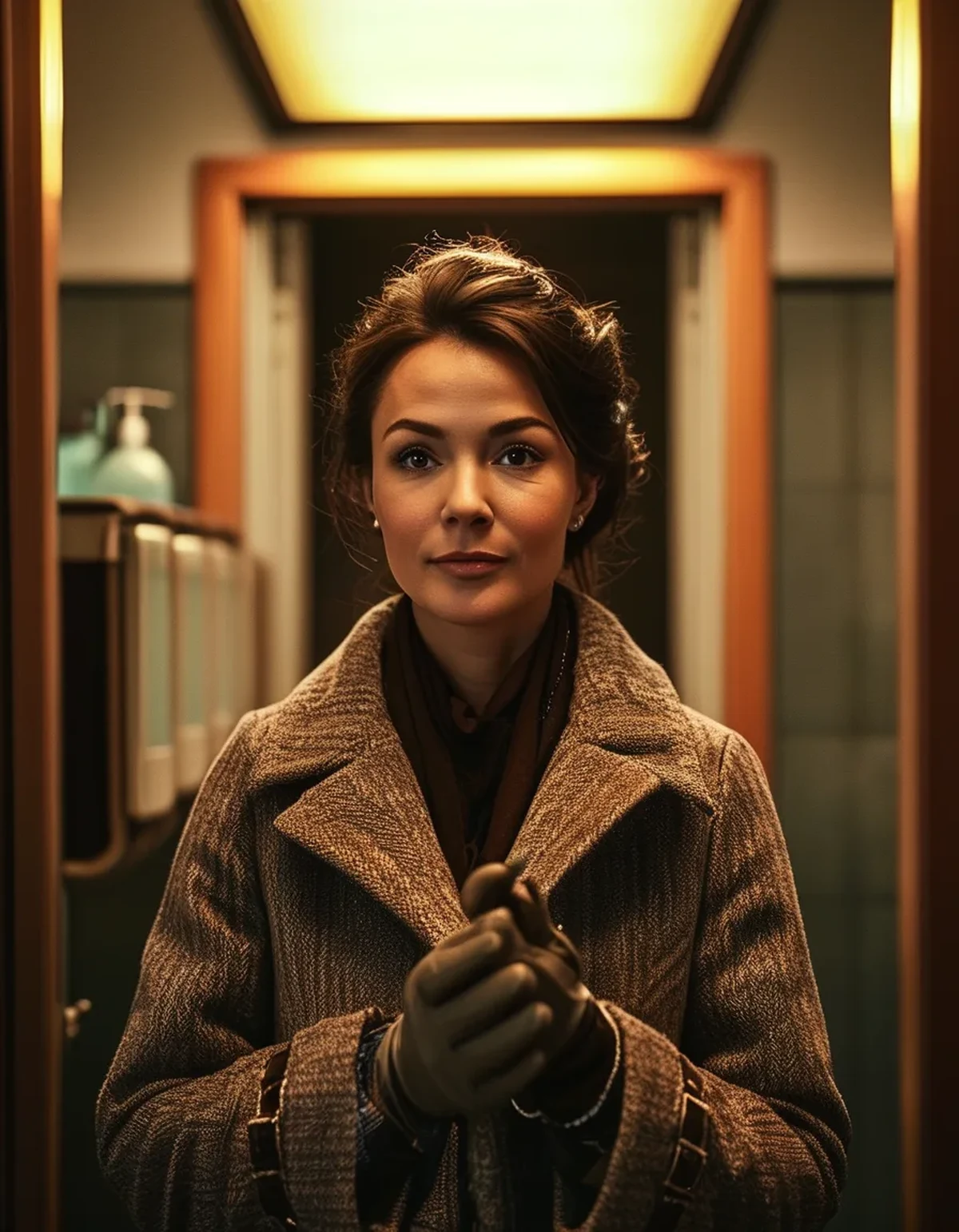
Why does one outfit for both never quite work?
Because you end up optimizing for the middle, and the middle is nobody’s target.
An outfit chosen to work at both 9am and 8pm has to be formal enough for the more formal context and interesting enough for the less conservative one. In practice people resolve this by dressing slightly up for the office, which reads as overdressed at the desk, and then arriving at the venue in something that is correct but visually flat.
Evening dressing and daytime dressing differ in specific, identifiable ways - and none of them are about formality level. They differ in surface (matte for day, some sheen or texture for evening), contrast (lower for day, higher for evening), and accessory weight (minimal for day, one deliberate statement for evening).
Those three are all swappable. The silhouette does not need to change at all.
This is why the swap approach beats the compromise approach. You wear a genuinely appropriate office outfit all day, and then change three things that account for most of the visual difference.
The corollary that matters: choose the base for the office, not for the event. If the base is right for eight hours at your desk, the swaps will handle the venue. Choosing an event-first base is how people spend a workday feeling conspicuous.
What are the three swaps that actually change the read?
Shoes, one upper layer, and jewelry - in that order of impact.
Shoes carry the most weight. A change from a flat or a block-heeled work shoe to something with a finer heel, a pointed toe, or a metallic or velvet finish shifts the entire outfit’s register. It is the single highest-return item in the bag, and it is also the one people most often skip because carrying shoes feels excessive. It is not.
One upper layer does the second most work. Swapping a structured work blazer for something with texture, drape or shine - a knit with some lustre, a velvet jacket, a silk shirt worn open over the base - changes what the eye reads first. The base underneath can be identical.
Jewelry is the cheapest and lightest of the three. One statement piece, chosen to be the only statement piece. Earrings are the most effective single item because they sit at face level where people are looking, and they photograph.
A fourth option if you have room: a change of bag. A structured work tote to a small clutch is a strong signal and it solves the where-do-I-put-the-tote problem simultaneously.
What not to swap: the base garment. Changing a dress or trousers in an office restroom is more difficult, more conspicuous, and produces a worse result than the three swaps do. If you find yourself planning a full change, the base was wrong this morning.
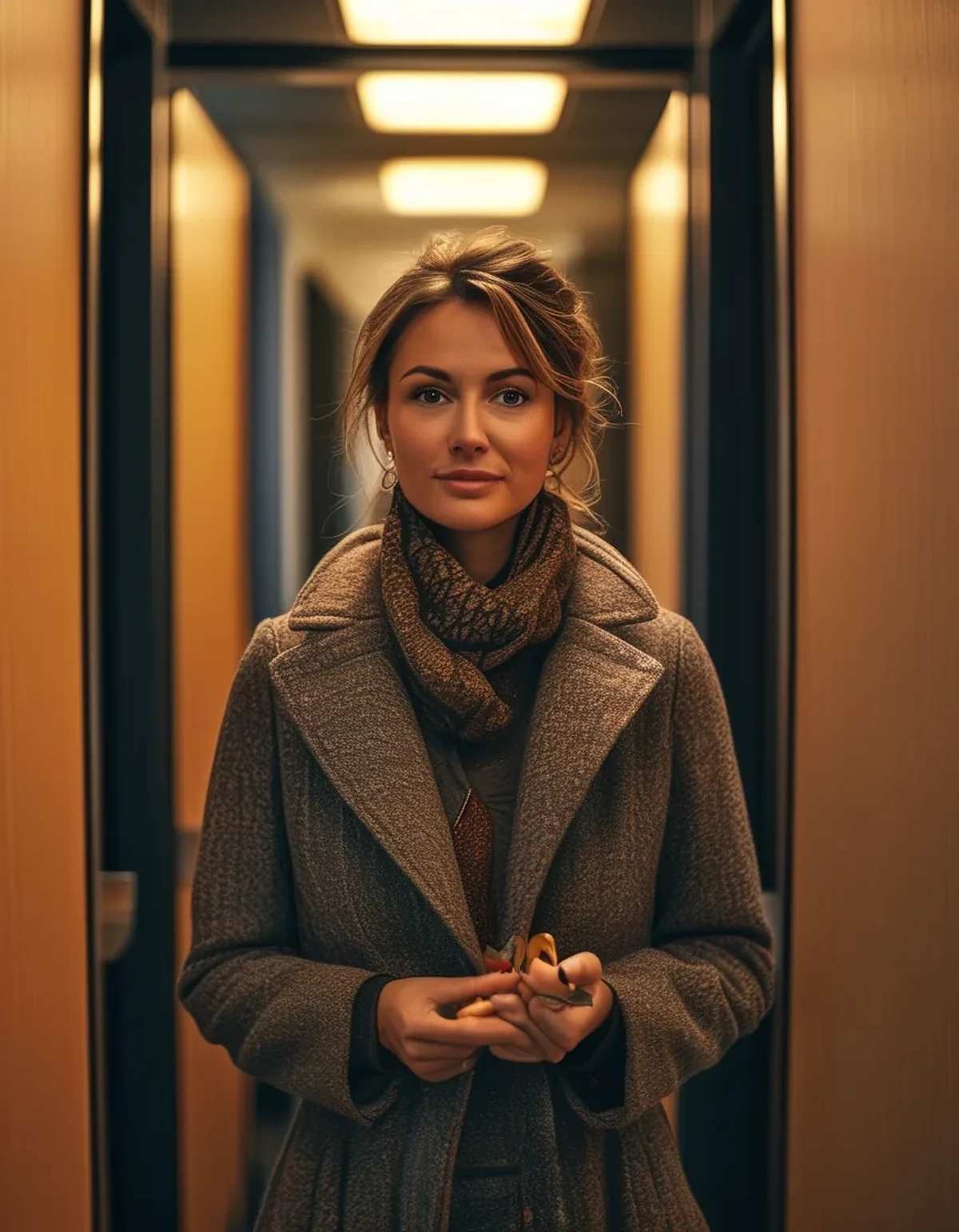
5 Mistakes Everyone Makes With the Office-to-Event Transition
1. Choosing the base for the event instead of the desk. You will wear it for eight working hours and three event hours. The eight hours should win the fabric and fit decision, and the swaps handle the rest.
2. Ignoring what eight hours does to fabric. Linen and most viscose blends look genuinely different by 6pm - creased at the hip, at the elbow, behind the knee. Choose wool, wool blend, ponte, crepe or a structured knit for a transition day. This is the decision that cannot be fixed at the venue, and it is made in the morning.
3. Underestimating the venue temperature gap. Autumn events are frequently in spaces that are cold on arrival and warm once full, and you will have a coat with nowhere to go if there is no coat check. A layer you would be happy to keep on all evening is worth more than a warmer one you will be carrying.
4. Doing the swap too late. Changing in the venue restroom on arrival means you walk in mid-transition and spend the first ten minutes adjusting. Do it before you leave the office, or at the last practical point before arrival.
5. Making more than one statement. A statement shoe, a statement earring and a statement jacket compete rather than combine. Pick one thing to be the interesting element and let the other two support it. This is the most common reason a swapped outfit reads as busy rather than considered.
What should the base actually be?
Something in a fabric that survives a working day, in a silhouette you do not have to think about.
Fabric first. Wool and wool blends, ponte, crepe, heavier knits and structured cotton all hold their shape through a full day of sitting. Avoid linen, unstructured viscose and anything that creased on the hanger - if it creases in the wardrobe, it will crease at your desk.
Colour: mid to dark tones are more forgiving over a long day, and they read as evening-appropriate more readily than pale ones. Darker also hides the coffee that happens on exactly these days.
Silhouette: choose something that does not need adjusting when you stand up. Sitting for eight hours followed by standing for three is the actual wear pattern, and a skirt or trouser that shifts when you move will require constant attention at exactly the moment you want to be paying attention to other people.
Two bases that reliably work: a well-fitted knit dress in a mid or dark tone, and tailored trousers with a fine knit top. Both take the three swaps cleanly, both survive a full workday, and neither reads as trying at the desk.
Practical detail people forget: whatever you wear, the underlayer matters. A base layer that has been on since 7am is the part that feels worst by 8pm, and a fresh one in the bag - a camisole, or just a change of the thing closest to your skin - is a genuine comfort upgrade that costs almost nothing in bag space.
And put the bag together the night before. The three swaps only work if all three are actually in the tote, and the item most often forgotten is the one with the highest impact: the shoes.
FAQ: Office to Event Questions, Answered
How do I carry everything without an obvious bag of stuff?
A structured tote that fits shoes flat at the bottom, with the layer folded on top and jewelry in a small pouch. Shoes in a fabric shoe bag rather than loose. If your workplace has a locker or a drawer, bring the items in the morning and leave them there - the swap bag never needs to be seen.
What if the dress code is unclear?
Default to the base plus swaps and bring the jewelry rather than the jacket. A well-fitted dark outfit with a good shoe and one statement piece is correct across a very wide range of autumn work events. The risk of being slightly underdressed is much smaller than the risk of being conspicuously overdressed at a work function.
Should I redo my makeup, and when?
If you are going to, the effective version is minimal: a fresh base only where it has worn, and one stronger element - a lip or a defined eye. A full redo in a work restroom takes twenty minutes and looks like a full redo. The stronger single element does most of the work in venue lighting, which is typically warmer and dimmer than an office.
What about the coat problem when there is no coat check?
Choose a coat you can drape rather than one you must wear - and if the event is standing and crowded, a lighter coat you can fold over an arm or a chair beats a warm one you have to keep track of. This is worth checking in advance; a lot of autumn venues genuinely have nowhere to put a coat, and it changes what you should leave the house in.
TL;DR:
- Do not compromise the base. Dress for the office and change three things.
- Shoes, one upper layer, jewelry - in that order of impact. Shoes carry the most.
- Fabric is decided in the morning: wool, ponte, crepe or structured knit survive eight hours; linen and loose viscose do not.
- Evening reads differ by surface, contrast and accessory weight, not by formality - all three are swappable.
- One statement only. Three competing statements read as busy.
- Swap before you arrive, and pack the bag the night before - the forgotten item is always the shoes.
The transition is three items and five minutes. The part that has to be right is the decision you made at 7am.
Keep Reading
This article is for general informational and styling purposes only. Fit, sizing, and product availability may vary.