The First Ten Minutes Problem With Event Outfits

Quick Answer: The outfit did not change - the context did. Your bedroom mirror shows a static, well-lit, solo version of you. An event adds motion, unfamiliar lighting, a temperature shift, and a room full of people setting the dress code. Test outfits under those four conditions before the day and most of the first-ten-minutes regret disappears.
It is a genuinely common experience, and it is not vanity. It is a prediction error, and predictions can be improved.
Why does the outfit feel different the moment you arrive?
Four things change at once, and none of them were present in your bedroom.
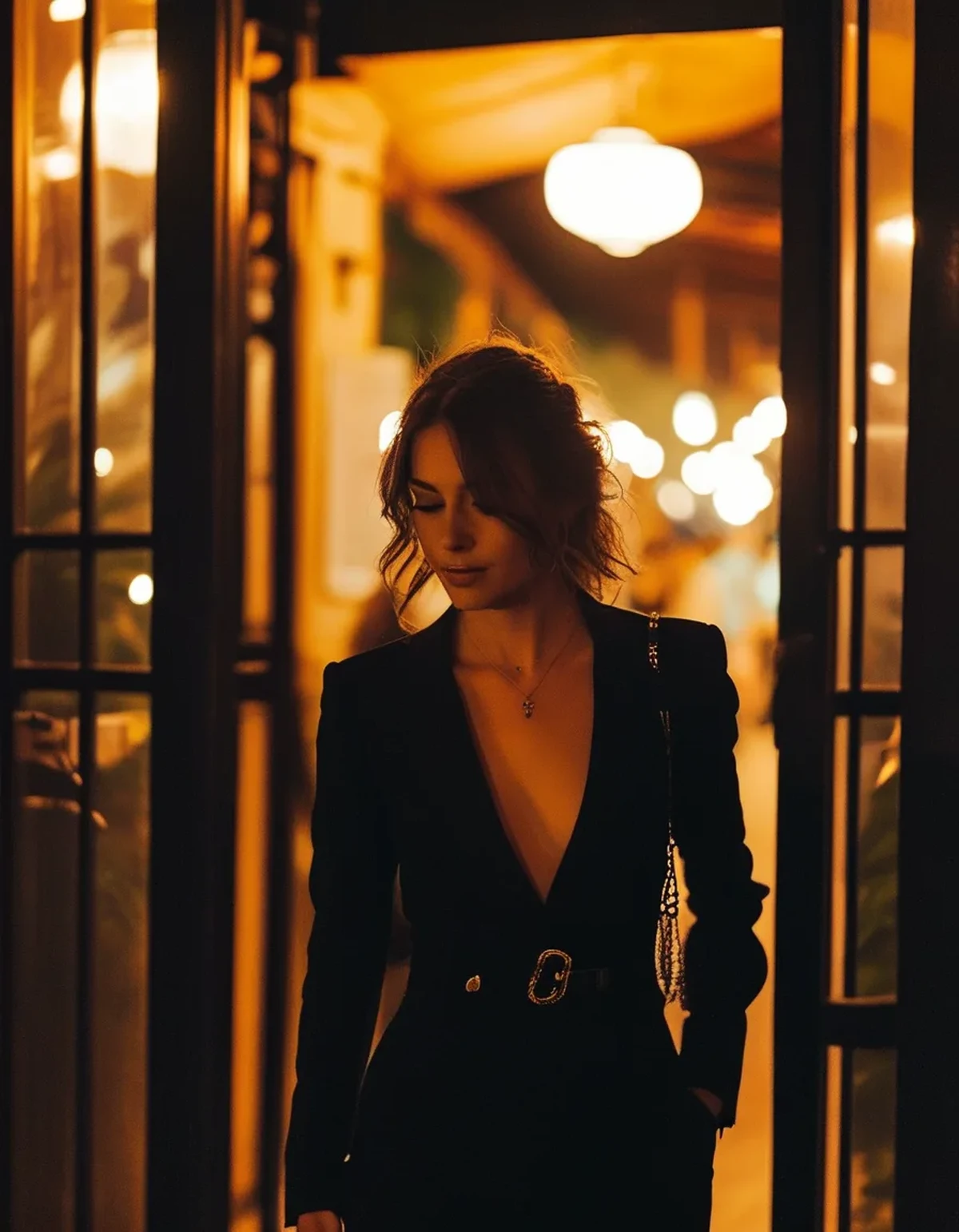
Lighting. Your mirror is probably lit from above or from a window. Event lighting is warm, low, and directional - which changes how fabric reads, flattens texture, and can shift colour noticeably. A deep navy reads black under warm light. A subtle sheen becomes an obvious one. Anything relying on precise colour matching is at risk.
Movement. You assessed the outfit standing still and facing forward. Within ten minutes of arriving you have walked, hugged people, sat, stood, and reached for a drink. Every one of those reveals things the mirror hides: a hem that rides, a neckline that shifts, a fabric that creases and stays creased.
Temperature. You dressed in a room at 20 degrees, travelled in a cold car, and walked into a crowded venue that is 25 degrees and climbing. Almost every layering decision that fails on the night fails here.
Everyone else. This is the big one. Dress codes are not absolute, they are relative to the room, and you cannot see the room until you are in it. Feeling overdressed or underdressed is a comparison being made in real time against information you did not have when you chose.
The useful reframe: you did not make a bad choice, you made a choice under incomplete information. The remaining sections are about getting more of that information in advance.
How do you test an outfit against real conditions?
A fifteen-minute rehearsal, done a few days ahead rather than an hour before.
Test it in the right light. Take a photo with the flash off in a warmly lit room - a lamp-lit living room approximates most venues far better than a bathroom does. Photograph front and side. A camera flattens the same way a room full of people does, and it catches things the mirror lets you overlook.
Test it moving. In the full outfit, do this sequence: walk twenty steps, sit in a low chair, stand up, reach both arms overhead, and hug someone or a doorframe. Then look. This finds riding hems, shifting necklines, and gaping waistbands in about ninety seconds, and it is the single highest-value test on this list.
Test the shoes properly. Not on carpet. Wear them on a hard floor for twenty minutes, at home, standing rather than sitting. Most event shoe failures are predictable and almost nobody predicts them.
Test the temperature plan. Decide specifically what you will do if the venue is hot and what you will do if it is cold, and make sure both options exist in the outfit. A wrap that has nowhere to go once removed is not a plan.
Sit down in it for ten minutes. Structured pieces that are comfortable standing can be genuinely unpleasant seated, and most of an evening is spent seated. This is the test that catches the outfits that feel fine at arrival and unbearable by nine.
What Nobody Tells You About Reading the Room
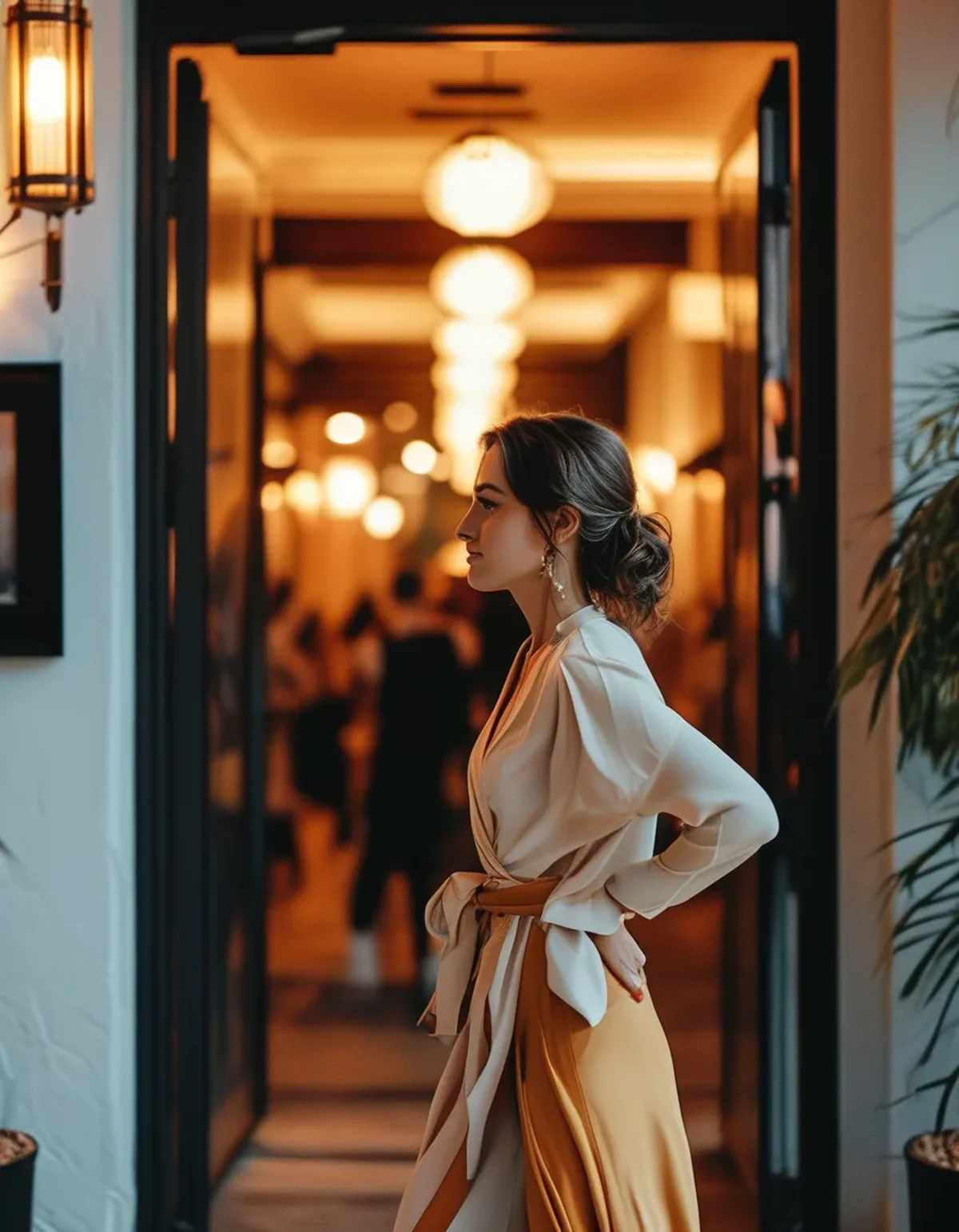
Arriving 20 minutes after the stated time is genuinely useful. Not for social reasons - for informational ones. It means you are not the reference point for everyone else, and you walk into a room with an established tone rather than setting it.
Ask someone who is going, specifically. Not what should I wear - people give useless answers to that. Ask what are you wearing. It is concrete, it is comparable, and it is a far better estimate of the room than any dress code description.
Overdressed is nearly always more comfortable than underdressed. If you have to guess wrong, guess upward. A slightly formal outfit in a casual room reads as effort. The reverse reads as not having realised, and there is no way to adjust upward once you have arrived.
Build in one adjustable variable. The best insurance is a single element you can change on arrival: a jacket that comes off, jewellery that comes out of a bag and goes on, a shoe swap in the car. One variable covers most of the range without requiring you to predict correctly.
The discomfort usually peaks at ten minutes and fades. This is worth knowing because it changes the decision. The arrival window is when you are most self-conscious, least occupied, and most actively comparing. Twenty minutes in, once you are talking to someone, it drops sharply. If you can name that in advance, you can decline to act on the ten-minute feeling.
Nobody is doing the audit you imagine. Well documented, consistently underestimated. People notice far less about what you are wearing than you assume, because they are busy running the same anxious process about themselves.
What should you actually change for next time?
Three habits that remove most of the problem.
1. Choose the outfit three days early, not the morning of. This is the largest single improvement available. It creates time to run the tests above, time to fix a problem you find, and it removes the panic-decision that produces most regretted outfits. The rushed choice is the risky one.
2. Keep a short list of outfits that have already worked. Not a capsule wardrobe project - just a note on your phone with three or four combinations that you have worn to real events and felt good in, with the type of event beside each. When the invitation arrives you start from a tested option rather than from scratch. It sounds mundane and it eliminates most of the failure rate.
3. Separate comfort failures from confidence failures. They need different solutions and get confused constantly. If the problem was a waistband digging in or shoes hurting, that is a fit and construction issue, fixable by choosing differently. If the problem was feeling wrong relative to the room, that is an information issue, fixable by asking someone and building in an adjustable element. Treating a confidence failure by buying a new outfit does not work, which is why it keeps not working.
For the transitional season specifically - late summer into autumn events, where a warm afternoon becomes a cool evening - the adjustable variable stops being optional. The temperature swing between a 6pm outdoor drinks reception and a 10pm walk to the car is substantial, and a plan for both is the difference between enjoying the evening and counting the minutes.
FAQ: Event Outfit Questions, Answered
What if I genuinely cannot tell what the dress code means?
Ask the host directly, or ask another guest what they are wearing. Vague codes like festive or smart casual mean different things to different hosts, and there is no shame in checking - it is a more sensible use of a text message than an evening of discomfort.
Should I bring a change of shoes?
If you will be standing for more than two hours or walking any distance, yes. A flat folded into a bag costs nothing and rescues an evening. This is normal and common, not a failure of planning.
How do I stop the ten-minute feeling from ruining the night?
Name it in advance. Knowing that arrival is the peak of self-consciousness and that it fades once you are in conversation makes it much easier to sit through. Getting into a conversation quickly, rather than standing at the edge assessing the room, shortens it considerably.
Is it worth buying something new for every event?
Rarely. New pieces are untested, which is precisely the condition that produces the problem described here. If you do buy something new, wear it for an hour at home first - moving, sitting, in the right light - so it is not genuinely new on the night.
TL;DR:
- The outfit did not change; the conditions did. Lighting, movement, temperature, and the rest of the room are all absent from your mirror.
- Rehearse the outfit days ahead: photograph it in warm lamp light, walk, sit, reach, and hug in it, and wear the shoes on a hard floor.
- Build in one adjustable element - a jacket, a shoe swap, jewellery in a bag - so you can respond to the room instead of predicting it.
- Ask another guest what they are wearing. It is a far better signal than the stated dress code.
- The self-conscious feeling peaks around ten minutes and drops once you are in conversation. Knowing that makes it easier to ignore.
Pick it out on Tuesday, walk around your kitchen in it, and Saturday takes care of itself.
Keep Reading
This article is for general informational and styling purposes only. Fit, sizing, and product availability may vary.