How Many Times Can You Actually Rewear the Same Event Outfit in One Season?

Quick Answer: For events with different guest lists, effectively unlimited - nobody tracks what you wore to a wedding they did not attend. For overlapping social circles, the practical limit is two or three wearings per season before it becomes a recognisable signature, and photographs are the real constraint rather than memory. Changing accessories, shoes, and layering shifts the visual identity enough that even repeat audiences read it as a different look.
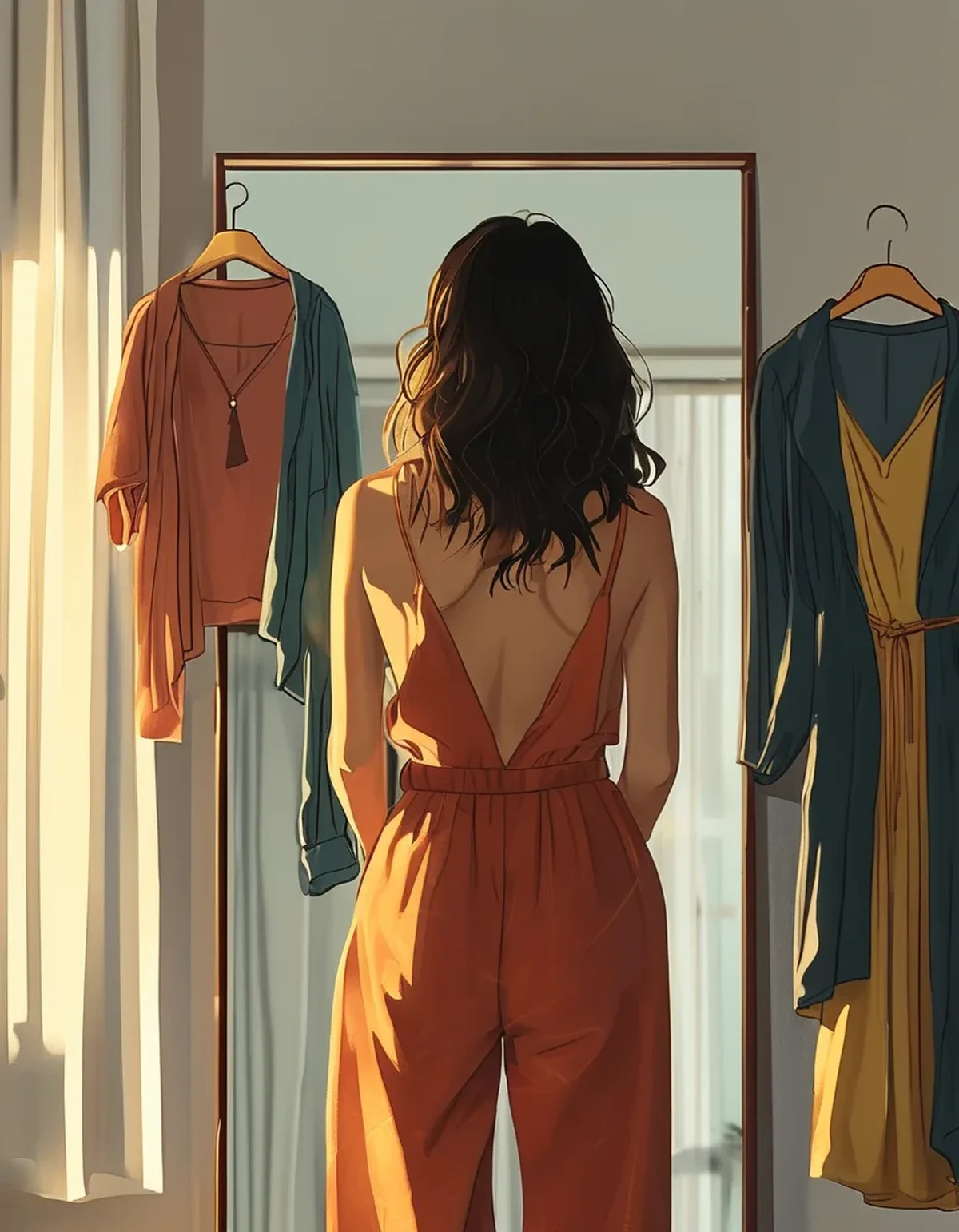
You bought one genuinely good outfit for the season. Now there are four events on the calendar, three of them with overlapping guest lists, and the internal debate has started.
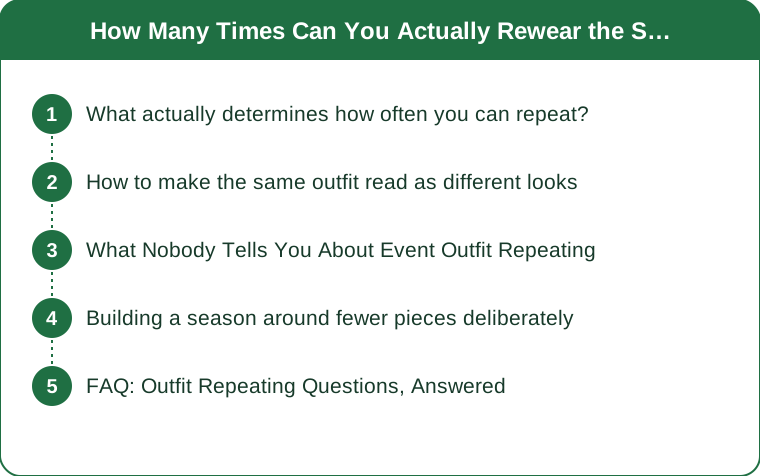
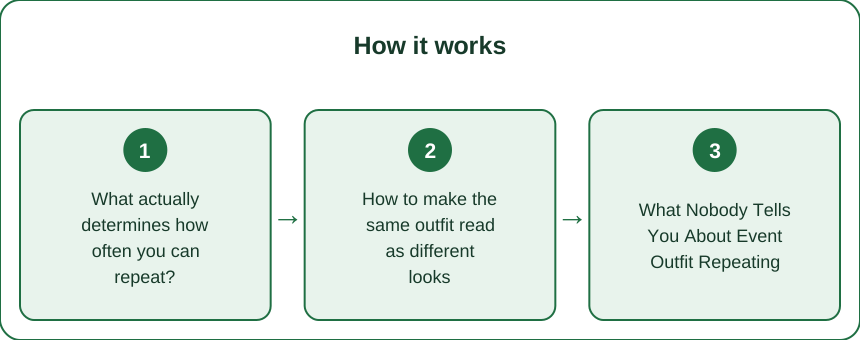
What actually determines how often you can repeat?
Not the number of wearings. The number of people who see it twice.
Guest list overlap is the entire calculation. An outfit worn at a work party, a friend’s wedding, and a family gathering has been seen once by each audience. The same outfit worn to three events with the same twelve people has been seen three times by everyone. These are completely different situations and people conflate them constantly.
Photographs are the durable record, not memory. Nobody remembers what you wore in November by January. But photographs posted online are searchable, permanent, and often seen by people who were not at the event. If two events are heavily photographed and shared to the same network, that is where a repeat becomes visible.
Formality level affects the ceiling. A distinctive floor-length dress in an unusual colour is highly memorable and has a lower repeat ceiling. A well-cut black dress or a neutral suit is effectively invisible as a repeat and can be worn indefinitely.
Distinctiveness matters more than cost. An expensive but plain outfit repeats better than a cheap but striking one. Sequins, bold prints, unusual silhouettes, and strong colours all register and get remembered.
And the honest observation: most people care far less than the person worrying about it. The anxiety about outfit repeating is almost always disproportionate to any actual social consequence, which does not make the anxiety unreal, but is worth naming.
How to make the same outfit read as different looks
Changing the elements that carry visual weight changes what people register.
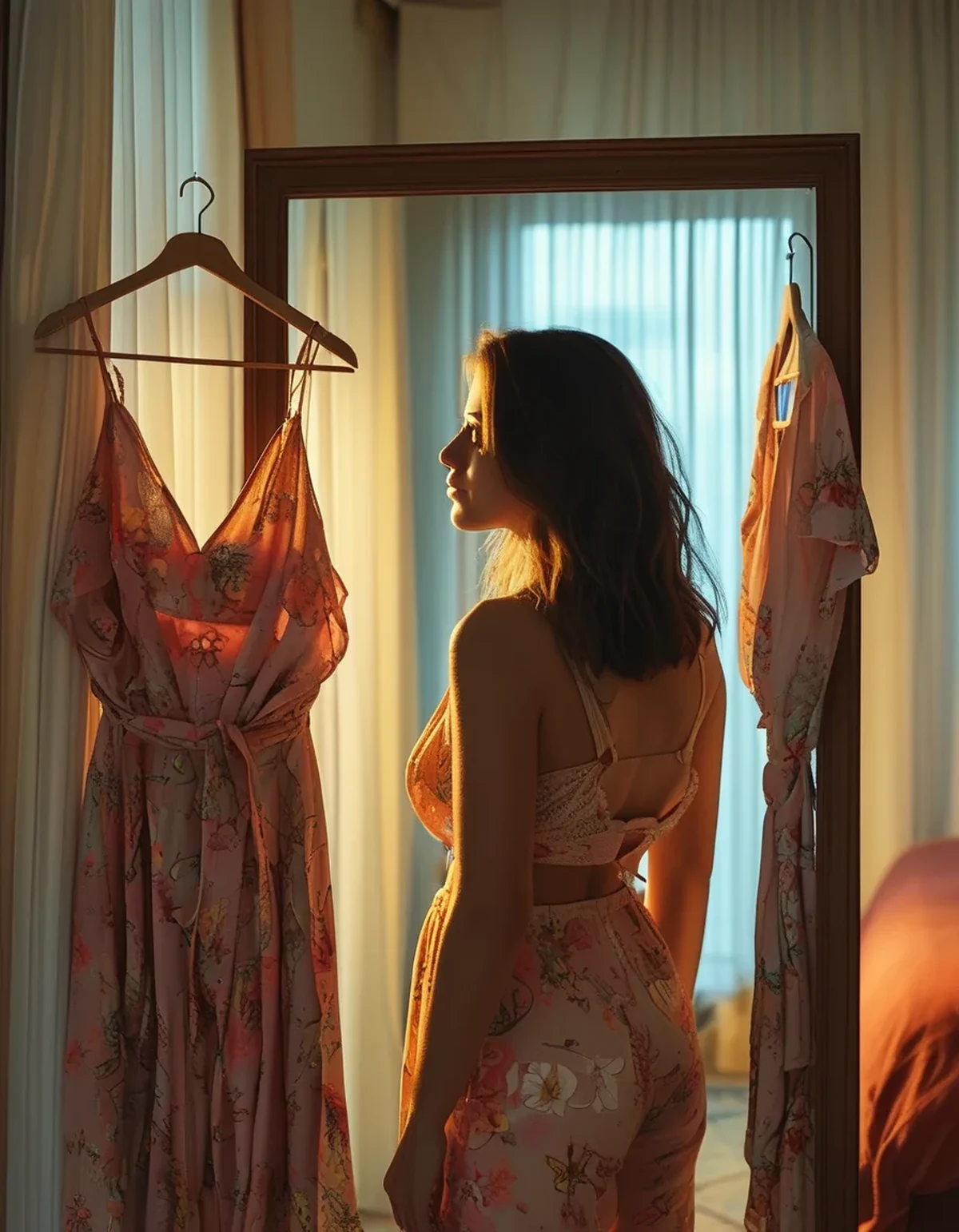
Shoes change the entire register of an outfit. The same dress with heeled boots, strappy sandals, or flats reads as three different levels of formality and three different moods. This is the highest-leverage single change available.
Layering transforms silhouette. A blazer, a cropped jacket, a wrap, or a fine knit over the same base creates genuinely different shapes. This works particularly well across a season where temperatures change anyway.
Statement jewellery is what photographs register. In images, the eye goes to face, neckline, and hands. Changing what sits in that zone - earrings, a necklace, a different neckline treatment - changes what a photograph looks like more than changing the skirt would.
Hair does more than most people credit. Worn up versus down changes the visual frame around the face substantially, and in photographs it reads as a bigger change than a different top.
Belting, tucking, and proportion changes cost nothing and alter the read of a garment considerably - a tucked-in top with a belt versus loose over the waistband is a different outfit to the eye.
The one thing that does not work: changing only the handbag. It is the element people notice least, and it is the change people reach for first.
What Nobody Tells You About Event Outfit Repeating
The people who notice are almost always the people who also repeat. Anyone paying close enough attention to what you wore three months ago is doing so because they think about clothes a lot, which means they understand the economics of a good piece better than anyone.
One excellent repeated outfit reads better than three mediocre new ones. Fit and quality register immediately and are what people actually respond to. A well-fitting, well-made piece worn three times makes a stronger impression than three cheap outfits that fit approximately.
Photographs of you in the same outfit at different events look intentional, not lazy. There is a long tradition of people with a signature look, and consistency across images reads as personal style rather than as limitation.
The cost-per-wear maths is genuinely persuasive. A piece worn four times in a season is doing four times the work of the one worn once, and it is often the reason to buy the better version in the first place.
Different venues change how an outfit looks anyway. Lighting, background, and setting alter colour and texture substantially. The same dress in a dim restaurant and a bright hall does not photograph as the same garment.
And the practical one: the outfit you have already worn is the one you know works. You know it stays put, you know it survives sitting down and standing all night, and you know how you feel in it. That is worth more on a real evening than the novelty of something untested.
Building a season around fewer pieces deliberately
If you know four events are coming, plan for them together rather than one at a time.
Choose one anchor piece in a neutral. Black, deep navy, or a rich dark tone in a good fabric with a clean silhouette. This is the piece that carries multiple events invisibly.
Add one statement piece for the event that matters most. The single most photographed or most significant evening gets something distinctive, and that piece then stays out of circulation for the rest of the season.
Invest the rest of the budget in accessories, not garments. Three sets of jewellery and two pairs of shoes cost less than two additional outfits and generate far more visible variety.
Check the fabric before committing to repeats. Anything worn multiple times in a season needs to survive wear, cleaning, and a full evening. Fabrics that crease badly, show marks, or need specialist cleaning between every wear are poor anchor candidates regardless of how they look.
Map the guest lists in advance. Two minutes of thinking about who will be at which event answers the repeat question more definitively than any general rule.
And keep one outfit genuinely in reserve. Having the anchor plus a known backup removes most of the last-minute panic that leads to buying something rushed and ill-fitting the week of an event.
FAQ: Outfit Repeating Questions, Answered
Is it acceptable to wear the same dress to two weddings?
With different guest lists, entirely - nobody at the second wedding knows what you wore to the first. With substantially overlapping guests, change shoes, layering, and jewellery, and it reads as a different look in both the room and the photographs.
How many times can I wear the same outfit in one season?
For a neutral, well-cut piece across different social circles, effectively as often as you like. For a distinctive or heavily photographed outfit within one social circle, two or three wearings is the practical ceiling before it becomes your signature - which is not necessarily a bad outcome.
Do people actually remember what you wore?
Rarely from memory. Photographs are the real constraint, because they are permanent, searchable, and often seen by people who were not there. If two events are lightly photographed, repeat freely.
What changes make an outfit look most different?
Shoes and layering change the silhouette and formality most; jewellery and neckline changes have the biggest effect in photographs because that is where the eye goes. Changing the bag alone does almost nothing.
Should I buy cheap outfits so I never have to repeat?
Generally no. Fit and fabric quality register immediately, and one excellent repeated piece makes a better impression than several inexpensive ones. The cost-per-wear on a good anchor piece is also substantially better across a busy season.
TL;DR:
- Guest list overlap, not wear count, determines whether a repeat is even visible.
- Photographs are the permanent record; memory is not - plan around what gets shared.
- Shoes and layering change silhouette most; jewellery changes what photographs register.
- Neutral, well-cut anchor pieces repeat invisibly; sequins and bold prints do not.
- One excellent repeated outfit beats three mediocre new ones on every measure that people actually notice.
The question is not how many times you have worn it. It is how many times the same twelve people have seen it, and that is usually a much smaller number than the anxiety suggests.
Keep Reading
This article is for general informational and styling purposes only. Fit, sizing, and product availability may vary.