One Outfit, Day to Night: Dressing for Events That Span Twelve Hours

Quick Answer: Outfits fail long events on three axes - temperature, formality, and comfort decay - and each axis needs one planned pivot, not a second outfit. Build on a base layer that reads appropriate in daylight and after dark, then carry exactly three changers: a layer that shifts warmth and formality (blazer, silk shirt, fine knit), one swap element (shoes or earrings), and a bag that holds the off-duty pieces. The 4pm-to-midnight events of late summer - long light, hot afternoons, cool nights - are the exact case this system was built for.
The invitation says 2pm. The bonfire ends at midnight. Between those two timestamps: full sun, golden hour photos, a temperature drop of twenty degrees, and zero chances to go home and change. One outfit has to be four outfits - and it can be, if you choose its bones for the last hour instead of the first.
Why long events defeat outfits - the three-axis problem
Understanding the failure modes turns a lucky outfit into a repeatable system.
Axis one: temperature swings both ways. A late-August event can open at 88 degrees on a reflective patio and close at 64 with wind off the water. Dressing for the average - the light cardigan compromise - leaves you sweltering at three and shivering at ten. The fix is never a middle garment; it is a base built for the hot hours plus a real warmth layer that stays in the bag until it earns its slot.
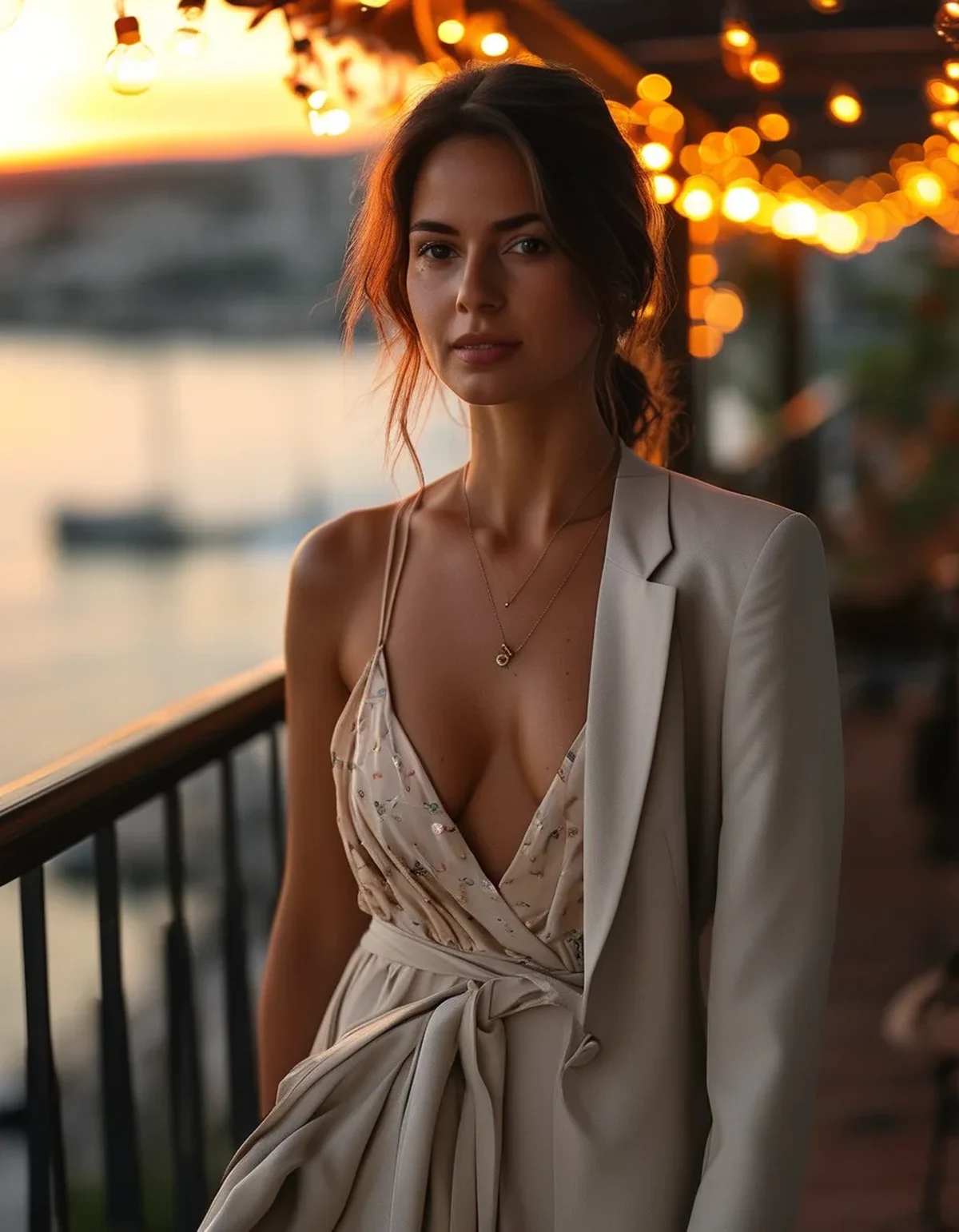
Axis two: formality drifts across the day. Daylight reads casual; candlelight and string lights read dressed. The identical slip dress that feels overdone at a 2pm cookout is exactly right at 9pm. Most people solve this backward - dressing for the arrival hour, then feeling underdone all evening. Dress for the peak hour and casualize the start, because you can dress a look down with flat sandals and a loose knot in your hair far more easily than you can dress up a t-shirt at dusk.
Axis three: comfort decays on a schedule. The heel that is charming at hour one is a liability by hour six; the fitted waist that photographed beautifully pre-dinner becomes the villain of the buffet. Twelve-hour clothes are load-bearing infrastructure - every element needs a plausible answer to the question, what does this feel like at hour nine?
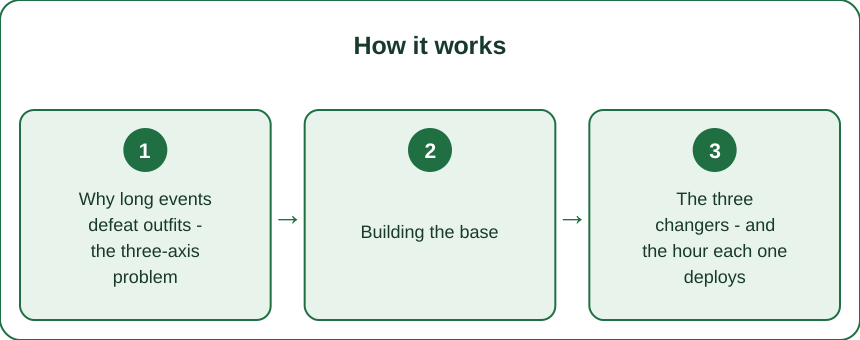
The architecture that survives all three: one base (dress, or matching set, or elevated knit-and-trouser pairing) chosen for the evening’s formality and the afternoon’s heat, plus exactly three changers. More than three and you are packing an overnight bag; fewer and one axis goes unanswered.
Building the base: what earns the twelve-hour job
The base garment does the heavy lifting, so audition it hard.
Fabric first, silhouette second. Twelve hours demands fibers that shed wrinkles and hide heat: matte silk blends, cupro, lyocell, crepe, ponte, and the better washable satins. Linen confesses every hour it has lived; clingy jersey broadcasts temperature and lunch. The test is brutal and quick - crush a handful of hem for ten seconds and watch what it remembers.
Choose the neckline for photos, the waist for dinner. Long events mean cameras at golden hour and a real meal somewhere - the two demands that fight. Necklines with structure (square, sweetheart, clean crew) hold up in every photo angle; waists want ease or forgiving construction - wrap fronts, subtle elastic panels, bias cuts - that look intentional and live kindly through a long table.
Darker bases buy formality after sunset. Deep olive, ink navy, espresso, and black absorb evening light and read dressed under strings and candles - while printing casual enough at noon with flat sandals. Pale pastels do the reverse, peaking at 2pm and washing out by nine.
Pockets and a phone plan. If the base has no pockets, the bag has to be one you will genuinely keep on you through a bonfire. This is where a set with real pockets quietly beats a dress - and why the elevated-knit-plus-wide-leg formula keeps winning long events. (It is also the honest reason flare leggings in a heavy matte knit keep sneaking into day-to-night rotations: with a tucked silk tank and the right shoe they pass every dusk formality check, and at hour eleven they are the only thing at the party nobody regrets wearing.)
The pre-event rehearsal: wear the full base at home for one hour, sitting, walking stairs, reaching. Every twelve-hour disaster announces itself in the first sixty minutes of a rehearsal - straps that wander, waists that fold, hems that catch on chair arms.
The three changers - and the hour each one deploys
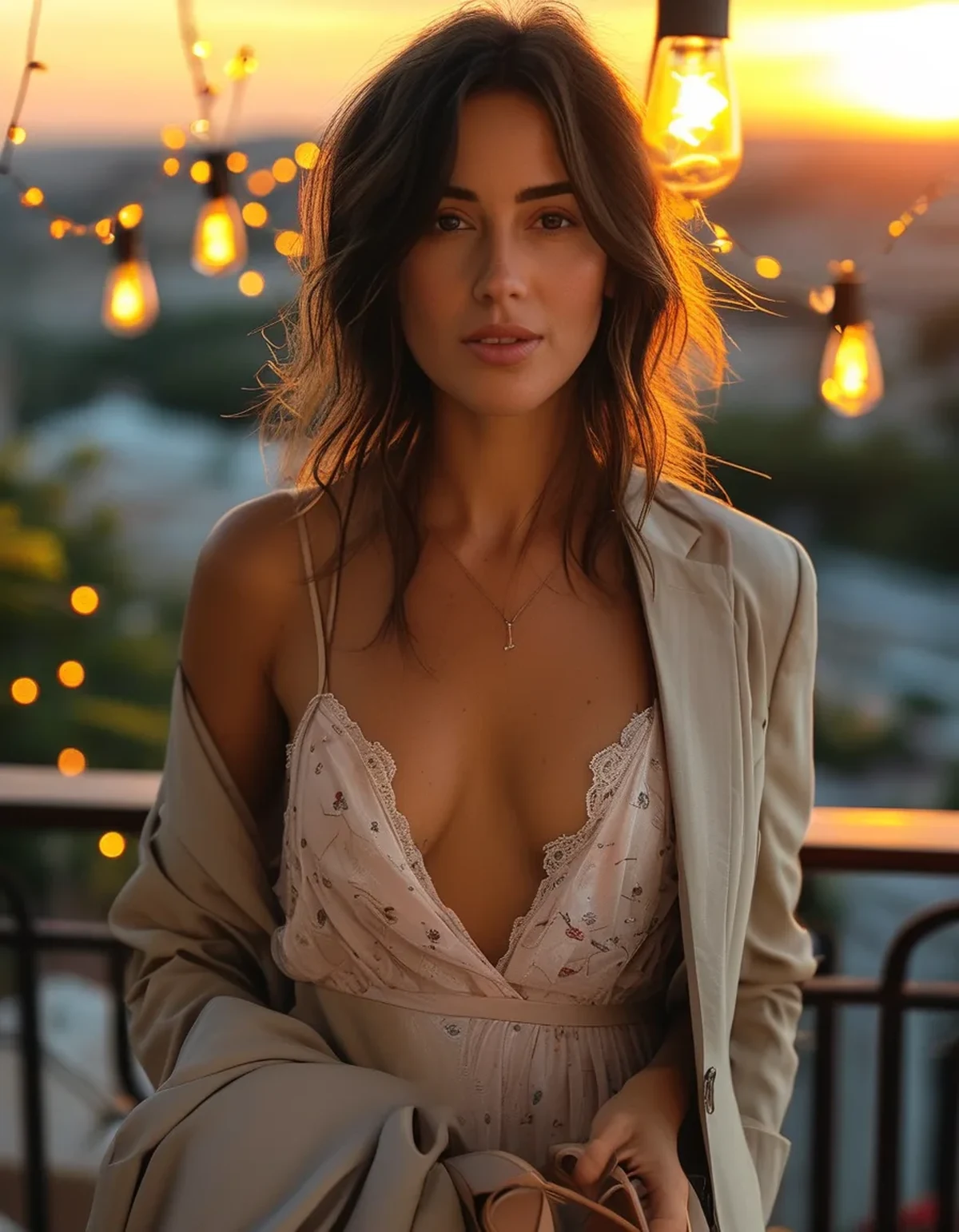
Changer one: the formality-warmth layer. One garment must do both jobs: a soft-structured blazer, an overshirt in silk or cupro, a fine-gauge long cardigan, or - for cooler coasts - a cropped leather or suede jacket. It lives in the bag or the car until roughly golden hour, then deploys as the temperature and the dress code rise together. Choose it in a color that deepens the base rather than matching it; tonal contrast is what makes one outfit read as two.
Changer two: the swap element - shoes or earrings, never both bags of tricks. Flat metallic sandals for hours one through six, then a block heel or a dressed flat from the bag; or keep the shoes and swap small daytime studs for the sculptural earrings that photograph at dinner. One deliberate swap reads as evolution; three reads as a costume change in the parking lot. If the terrain is grass or gravel, the swap is heels-to-flats reversed - and everyone at the bonfire will envy your ankles.
Changer three: the bag that eats the evidence. A mid-size tote or soft crossbody that swallows the folded layer, the swap shoes, sunscreen, and the clip that rescues hour-ten hair - then compresses into something carryable at night. The bag is the logistics officer of the whole operation; a tiny evening clutch chosen at 1pm is how women end up holding their sandals at midnight.
The deployment schedule, roughly: arrive casualized (flats, hair down or loose, layer hidden). Golden hour: layer on, earrings swapped, lipstick refreshed in two minutes flat. Dark: hair up if it is humid, heel swap if the ground allows. Each pivot takes under three minutes and zero mirrors - which is the entire point of planning them at home.
What Nobody Tells You About Day-to-Night Dressing
The temperature drop always beats the forecast. Evening lows arrive early at outdoor venues - water, open fields, and stone patios run five to ten degrees below the airport number the app quoted. Pack the layer for the venue, not the forecast, and add a wrap-scarf in the bag as the emergency second layer that doubles as a bleacher blanket.
Golden hour is the real dress code. Whatever you look like at sunset is what the event’s photos say you wore. Schedule your best configuration - layer, earrings, fresh lip - for the hour before sundown, not for arrival. Nobody photographs hour two.
Deodorant, blotting papers, and a hair tie outrank a second outfit. The difference between fresh and wilted at hour nine is rarely clothing - it is fifteen grams of toiletries in the bag pocket. The five-item kit: blotting papers, travel deodorant, lip color, hair clip, one safety pin. It has saved more evenings than any backup dress.
Shapewear is a two-hour promise, not a twelve-hour one. The smoothing layer that feels fine in the bedroom mirror at 1pm becomes the countdown clock of the entire event. If the base needs structural help to work, the base is wrong - choose fabric weight and cut that do the smoothing, and let your skin have the evening off.
Cars are closets. If driving, stage the night kit in the trunk: the jacket on a hanger, the swap shoes, a full water bottle for the ride home. The trunk turns one-bag logistics into zero-bag hours - the single biggest quality-of-life upgrade for outdoor events.
And the social one: nobody remembers that you re-wore; everyone remembers that you stayed. The friend still comfortable, still warm, still dancing at midnight in the same base she arrived in is the best-dressed person at every long event. Endurance is the flex.
FAQ: Day-to-Night Outfits, Answered
What single outfit works for a 2pm-to-midnight outdoor party?
A dark-toned base in a crush-proof fabric - slip dress, or silk tank with wide-leg trousers - worn casual at arrival with flat sandals, then evolved at golden hour with a soft blazer or overshirt, an earring or shoe swap, and hair up. The bag carries the layer and the kit; the base never changes.
How do I stay warm at night without ruining the outfit?
Plan the warmth layer as part of the look from the start - a jacket in a deeper tone than the base, chosen for how it photographs, not grabbed from the car in a panic. Add a large scarf-wrap in the bag as the second stage. Cold ruins outfits faster than any fashion error.
Heels or flats for a long event?
Both, sequenced: the shoe you can stand in for six hours is the main shoe, and the other one is the changer. On grass or gravel, block heels or wedges only - stilettos aerate lawns. If only one shoe is possible, choose the flat and dress up the earrings instead.
How do I make the same dress look different in evening photos?
Three levers: the layer (adds structure and a second color), the hair (down at day, up at night changes a neckline completely), and the light itself - evening light darkens and dresses every fabric. A lip color shift from neutral to deep does more than a garment change.
What goes in the bag for a twelve-hour event?
The folded layer, the swap element, blotting papers, deodorant, lip color, hair clip, safety pin, phone battery, and sunscreen for the daylight half. If it does not fit in a mid-size crossbody, the plan has too many parts - cut the second backup, keep the warmth.
TL;DR:
- Long events fail outfits on three axes - temperature, formality, comfort decay - and each gets one planned pivot, not a second outfit.
- Build a dark, crush-proof base for the evening’s peak hour and casualize the daytime start; dressing down is easy, dressing up at dusk is not.
- Carry exactly three changers: a warmth-formality layer, one swap element, and the bag that holds the operation.
- Deploy at golden hour - photos define what the event thinks you wore - and pack the venue’s temperature, not the forecast’s.
- The fifteen-gram toiletry kit outperforms any backup outfit, and the trunk is a legitimate closet.
Twelve-hour events are not a styling problem; they are a logistics problem wearing a dress. Solve the logistics at home and the style holds from the first hello to the last ember.
See It in Motion
Seen here: High Waist Drawstring Wide Leg Yoga Pants with Pockets — shop it on bubblelime.com
Keep Reading
This article is for general informational and styling purposes only. Fit, sizing, and product availability may vary.